Wednesday, 28 June 2023


Relook at a Book: New Edition of C S Venu’s Then Banned Biography of Bhagat Singh


Chaman Lal | 28 Jun 2023India

Venu’s biography of Bhagat Singh, despite some errors in dates and narration, is one of the authentic records of those times, and its new edition is welcome.

Relook at a Book: New Edition of C S Venu’s Then Banned Biography of Bhagat Singh

Venu, C S, Sirdar Bhagat Singh (Banned biography), ed. Rajwanti Maan, 2022, Delhi, New World Publication, 114, Price Rs 150.

 This was one of earliest biographies of Bhagat Singh, published in the year 1931, immediately after his execution. Its price was just six annas at that time and its copies were available from the author's address in Madras. All books, especially biographies and poetry on Bhagat Singh, were promptly proscribed.  The new edition of the book has been published after 91 years. Rajwanti Maan, the Haryana archivist got its copy from the British Library, London, and under her ‘editorship’, it was published in 2022 by a relatively new publisher -- New World Publication.

The author, a Tamil, was in Lahore jail at the time of the execution of Bhagat Singh, Rajguru and Sukhdev. In the fresh edition, Rajwanti Maan, in her brief introduction, has quoted from the biography but has not used the latest information to update.

In Venu’s biography, the hunger strike period of Bhagat Singh in jail is referred to as 116 days. The editor has neither mentioned that the hunger strike period was actually110 days, which was mentioned in newspapers, such as The Tribune, at that time. She also does not mention that Bhagat Singh went on two more hunger strikes adding more days.

As per the editor, CS Venu’s biography was acquired by the British Library London on November 12, 1931. It was an 80-page book, priced six annas, and had the address of the author for copies. Its original title was Sirdar Bhagat Singh. No justification has been given as to why the word Sirdar has been changed to Sardar in the latest edition. The editor ends her introduction with the para from Dreamland, a poetry book by Lala Ram Saran Das, whose introduction was written by Bhagat Singh at the poet’s insistence. The editor has titled eight chapters. The original edition, perhaps, had breaks but was not divided into titles. Every new title or break began with some couplet from a classic revolutionary poem quoted by Venu.

The first chapter, ‘Childhood and Early Influences’ starts with a quote from Walter Scott’s poetry:

   “Oh hush thee my baby, the time soon will come/When the sleep shall be broken by trumpet and drum/Then hush thee my darling, take rest while you may/For strife comes with manhood and waking with day.”

Venu refers to the 1906 Congress session at Calcutta, where Ajit Singh with Lala Lajpat Rai and Kishan Singh thundered the demand for freedom for India. He refers to Bhagat Singh’s birth date as September 19, 1907. Jitendranath Sanyal, the first biographer of Bhagat Singh, who was acquitted in the Lahore conspiracy case but convicted to two-year imprisonment for writing the biography, has also falsely mentioned Bhagat Singh birth date as October 5. It was only after Virender Sandhu wrote the biography of three generations of his family that Bhagat Singh’s birth date was confirmed as September 28,1907. 

The first chapter goes up to the 1919 Jallianwala Bagh massacre. The author makes another fallacy in the chapter by mentioning Batukeshwar Dutt as Bhagat Singh’s school mate and inseparable companion. Bhagat Singh met BK Dutt for the first time in 1923 at Kanpur. The editor has not made any editorial change or footnote to correct this.

The second chapter, ‘The Blast of the Trumpet, begins with a quote from De Quincey’s poetry:

    “The Blood-stained murder bare thy hideous arm/And thou Rebellion welter in thy storm/Awake ye Spirits of avenging crime/Burst from your bonds and battle with time.”

This chapter focuses upon the Delhi Assembly bomb incident of April 8, 1929. The author is more accurate in its description and describes the passing of the Public Safety Bill by 56 against 38 votes as the time when the bombs exploded near George Schuster’s bench. As author John Simon, present in House, ‘took to his heels’, Sir Hari Singh Gour, on whose name Sagar University in Madhya Pradesh was named,  ‘locked himself in the Bathroom’! ‘Red’ pamphlets were thrown by Bhagat Singh and Dutt in the Assembly. The author correctly mentions that this act was inspired by French revolutionary Auguste Vaillant, whose words at a similar explosion in French Parliament: “It takes a loud voice to make the deaf hear” were repeated in the Delhi Assembly pamphlet!

The author, a follower of Gandhi and Congress, declares ‘a thousand times emphatic ‘No’ to the charge of terrorism in this act!

The third chapter, ‘The Trial and the Sentence’, begins with a quote from Indian poet Harin Chattopadhyay:

   “Life or death? What does it matter? / Heroes ever scorned the grave/Tyrant, we are out to shatter/The Last fetter of the slave/Let us shout from tower and Steeple/Now our banner is unfurled/That by fighting for our people/We are fighting for the world.”

In this chapter, the reference to the 116-day record hunger strike comes after mentioning the earlier record of 97 days hunger strike by an Irish revolutionary. The reference to one judge, (Justice Agha Hyder) expressing disgust at the beating of revolutionaries, does not mention his name.

‘Ordinance Challenged’ is the title of the fourth chapter and the quote is from a poem by Vanzetti, who himself was hanged in US:

 “O capitalist system I know you well/I have heard the prayers of your starving children/I have heard the groans of young dyeing soldiers/I have seen the agony of strong men hunting for jobs/I know your crimes capitalism; I know your crazy houses/Your jails, factories, hospitals filled with victims/You are a monster, I hate you/I am glad to die!/Friends Ghouls!Assassins of the poor/We will have revenge!/Revolution! Give me a million men/And I will walk from this jail/And set America free.”

 This chapter contains almost a verbatim record of the Privy Council proceedings in London. Gandhi has been described as a ‘benevolent Saint’ and it mentions that not less than 20 million signatures had gone to the Viceroy asking for mercy.

Chapter five again begins with Vanzetti’s long poem In this chapter, ‘The Sacrifice’, the Lahore hartal after the executions and the Mori Gate meeting of 20,000 people has been mentioned. One lakh people, bare headed, marched in procession, taking the three martyrs’ biers with charred body parts, and cremated them at Ravi river site.

The sixth chapter, ‘A Nation in Mourning’, also begins with Vanzetti’s poem. A mention has been made of Dewan Bahadur Rangacharya, leader of opposition in the Central Assembly, making a statement. Chapter seven, ‘Fundamental’, begins with a  shloka from Bhagwad Gita.

The eighth chapter, ‘Conclusion’, discusses the death of Greek philosopher Socrates but his philosophy living, and the letter written by Bhagat Singh to young political workers. The author, Venu, mentions here his being in the same jail and getting a chance to speak with him.

Venu was so inspired by Bhagat Singh in jail, that after his release and going back to Madras, he wrote his biography, probably publishing it with his own money, which was proscribed immediately.

Biographies written during the early period of Bhagat Singh’s execution are more factual and objective, though there are errors in certain dates. C S Venu’s biography of Bhagat Singh, despite some errors in dates and narration, is one of the authentic records of those times and its new edition is welcome.

Chaman Lal is retired Professor from JNU and is Honorary Advisor, Bhagat Singh Archives and Resource Centre, Delhi Archives, New Delhi.


Wednesday, 8 February 2023

Bhagat Singh and Gandhi-the complex relationship


Mahatma Gandhi and Bhagat Singh (With Subhash Bose)
Chaman Lal*

As we commemorate the 75th martyrdom anniversary of Mahatma Gandhi, one question is
perennially linked with Shaheed Bhagat Singh. Could Gandhi have saved Bhagat Singh?

Whatever the political views of Gandhi may have been, he was martyred while fighting a tide
of communal hatred. Before he was assassinated by Nathuram Godse on January 30, 1948, he was
attacked many times. In the month of January that year itself, attempts were made on his life.
Despite Jawaharlal Nehru pleading to have his security tightened, Mahatma Gandhi refused. Had
Bhagat Singh alive at the time of Mahatma Gandhi assassination, he would have been the first to
condemn it in strongest terms. In fact at one time, a Hindutavite religious organisation had offered
to supply arms to Chandershekhar Azad, provided they killed M A Jinnah and Azad had contempt
for them, expressing his anger-‘they think us, professional murderers not revolutionaries’! 

Unlike Bhagat Singh, ‘Shaheed’ never came to be associated with Gandhi perhaps because the
epithets ‘Mahatma’, referred to first by Rabindranath Tagore in all likelihood, and ‘Father of Nation’,
coined by Netaji Subhas Chandra Bose, had become more accepted and popular even when he was
alive. In public imagination, both Gandhi and Bhagat Singh held highest degree of popularity, as
Congress party historian Pattabhi Sitaramaih himself recorded in his history of Congress party! In
post independence era. ruling Congress party and some historians limited Bhagat Singh role during
freedom struggle as of just a brave and fearless revolutionary. It goes to the credit of historians
like Sumit Sarkar, Bipan Chandra and K N Pannikar to underline the role of Bhagat Singh as an
ideologically committed socialist revolutionary through his writings, with an alternative path to
freedom of India! 

Netaji, who had defeated Gandhi-patronised leaders in the Congress presidential elections in 1938
and 1938, had to quit and float a new political party, Forward Bloc, owing to differences with
Gandhi. Yet, the same Netaji, incidentally whose 126th birth anniversary was also observed recently,
was the one who described Mahatma Gandhi as Father of Nation (Rashtarpita) and set up Gandhi,
Nehru and Azad brigades in the Indian National Army (INA) or Azad Hind Fauj, whose command he
took over from Ras Behari Bose earlier.

Ironically, Netaji’s daughter Anita Pfaff Bose has exposed recent attempts to appropriate Netaji’s
legacy, calling her father a ‘leftist’ as against a ‘rightist’ party trying to appropriate Netaji Bose
legacy!

Interestingly, in March 1931, British Viceroy Lord Irwin had sent, through his secretary, a letter
addressed to Gandhi to stop Netaji from holding a public protest against the execution of Bhagat
Singh, Rajguru and Sukhdev. Gandhi plainly refused to intervene and told Irwin’s secretary that he
could not stop Netaji from holding a huge public protest in Delhi on March 20.


In the 1938 and 1939 Congress elections, Bhagat Singh’s comrades — Mubarak Sagar, Ahmaddin and
Ghadarites like Baba Bhagat Singh Bilga , who were part of All India Congress committee(AICC)
then— had supported Netaji.

A mass-based Congress movement from 1885 onwards included multiple ideological streams —
from feudal landlordism to revolutionary socialist views as expressed through the Congress Socialist
Party (CSP). Stalwarts like Jai Prakash Narayan, Ram Manohar Lohia, Acharya Narender Dev, Nehru
and Netaji, even Communists like EMS Namboodiripad, were all working as part of CSP.

Groups or parties like the Muslim League, led by MA Jinnah who was part of the Congress at one
time, Hindu Mahasabha, RSS and pro-Sikhistan Akalis were working towards creating religion-based
nations.

There were the revolutionaries, from uprisings prior to 1857 and later. From Anushilan Samitis
to ‘Jugantar’, Ghadar Party, to Naujawan Bharat Sabha and Hindustan Socialist Republican
Army/Association (HSRA), the Chittagong revolutionary movement, Azad Hind Fauj and finally, the
Indian Navy Revolt of 1946. Bhagat Singh and fellow revolutionaries, even later ones after Bhagat
Singh, were dead against such concept of a religion based nation and they visualised an inclusive,
non sectarian and exploitation free India!

All these socio-cultural streams had a complex relationship with each other. Religion-oriented
nationalist movements were in constant conflict with the mass-based Congress party as well as with
different revolutionary streams, though Abhinav Bharat like religious organisations had been in
touch with some former revolutionaries who had turned into religious fundamentalists later

However, later-day revolutionaries took a clear ideological position of a secular India with religious
or any other faith as the private affair of revolutionaries. Members of HSRA and Chittagong
movement became more pronounced socialist revolutionaries. The groups were in constant
interaction with the Congress. Even Bhagat Singh and his associates were in touch with the Congress
and in one elections to Central and provincial assembly, had supported Moti Lal Nehru led Swaraj
party against Lala Lajpat Rai party, which was perceived to be more close to religious concept of
nation! Later both factions had merged in parent party Indian National Congress party.

National College, Lahore, was set up at Bradlaugh Hall, headquarter of Punjab Congress party. It was
the nursery of Bhagat Singh-led revolutionary movement. Acharya Jugal Kishore and Principal
Chhabil Das, the two college principals from 1921 to 1926, were members of the Congress party as
well as sympathisers of revolutionaries.

3

Netaji Subhash Bose, Motilal Nehru, Jawaharlal Nehru, Madan Mohan Malviya, Lala Lajpat Rai and
Purshotam Das Tandon had a constant interaction with the revolutionaries. Netaji and Jawaharlal
Nehru had been presiding over annual meetings of Naujwan Bharat Sabha, incidentally held around
same time and venue when the Indian National Congress sessions were being held.

Gandhi and Bhagat Singh probably never met each other. Bal Gangadhar Tilak may have blessed
Bhagat Singh in his childhood, when his father Kishan Singh and uncle Ajit Singh had taken him to a
Congress session, where Tilak bestowed a ‘taj’ on Ajit Singh in appreciation of his role during the
Pagdi Sambhal Jatta farmers’ movement of 1907.

Bhagat Singh had accompanied his father Kishan Singh to the 1924 Belgavi Congress also, the only
Congress session was presided over by Mahatma Gandhi.

There are chances that Bhagat Singh would have paid his respects to Gandhiji and may have shared a
few words as well, but both Gandhi and Bhagat Singh never mentioned about it. However, in the
writings of both Gandhi and Bhagat Singh, there are ample references to each other. In his famous
‘Letter to Young Political Workers’ (February 2, 1931), Bhagat Singh praises Gandhi as a leader who
can impress masses immensely and he wishes revolutionaries to learn this art from him, but he is
equally critical of his views as an ‘idealist’ and impractical.

He even prophesies that Gandhi will not have any permanent followers of his ideas! After the
pronouncement of death sentence to Bhagat Singh, Rajguru and Sukhdev, Mahatma Gandhi did try
to get their sentence commuted in communication with Viceroy Irwin, but while appealing for the
reprieve of revolutionaries, Mahatma Gandhi did not take his own professed principled stand
against capital punishment, whatever the crime, political or otherwise.

Gandhi could not have saved the lives of the three revolutionaries as Bhagat Singh himself was
determined to sacrifice his life in order to shake the conscience of Indian people to rise for achieving
freedom from British colonial rule!

Mahatma Gandhi praised Bhagat Singh’s bravery but was critical of his militant revolutionary
approach towards achieving freedom. After his execution, Mahatma Gandhi in the Karachi Congress
got a resolution moved through Nehru which praised Bhagat Singh’s bravery and patriotism, but
asked youth ‘not to follow his path’.

In political terms, Gandhi and Bhagat Singh were poles apart. One was a committed atheist and
socialist and the other deeply religious but non-communal, respecting all religious faiths equally.
Historian V N Datta, who had authored a book-Gandhi and Bhagat Singh, was favourably inclined
towards Mahatma Gandhi’s view of nationalism and national struggle and upheld Gandhi’s
criticism of Bhagat Singh. 

4

Towards the end of his life, Bhagat Singh and his comrades had realised that a peaceful militant
mass mobilisation of workers, peasants and youth was the way towards achieving their goal of
socialism, but they never ruled out the use of violence if absolutely necessary, for achieving their
final goal of socialism! By then, their revolutionary organisation HSRA was almost in disarray as
most of its leading figures were either martyred or incarcerated for a long period. Many of Bhagat
Singh’s comrades joined CPI after release, few joined Congress party and one or two joined RSS
oriented groups! (Third point already covered here)

By his consciously chosen martyrdom, Bhagat Singh wanted to create an icon for future generations
to follow. The farmers’ protest of 2020-21 saw a year-long peaceful but militant struggle, mixing the
Gandhian methods with Bhagat Singh’s revolutionary ideology, which led to their victory and
the government had to buckle down by withdrawing the controversial farm laws.
*Chaman Lal, an ex Dean of PU Chandigarh and retired Professor from JNU is the editor and author of
The Bhagat Singh Reader and Life and Legend of Bhagat Singh.

Tuesday, 13 December 2022

Spreading Bhagat Singh’s ideas: Through Military Literary Festival

                           Bhagat Singh in Military Literary festival!

                                                     Chaman Lal*

    Spreading Bhagat Singh’s ideas : The Tribune India

              It was a bit perplexing for me when I got a call from Sports University Patiala Vice Chancellor Lieutenant General (Retired) J S Cheema inviting me to be part of a discussion panel in a session on Bhagat Singh in Military literary festival, as I could not see any connection, since the military literary festival concentrates more on defence related books and matters, national and international. Among other panellists, he named Major General (Retd.) and Mahavir Chakra awardee Sheonan Singh, who is nephew of Bhagat Singh, but who never let it known during his whole military service, of this close relationship, as he thought it will be construed as seeking favour or privilege! Only after retirement, he let it be known in an interview in a national daily. That made me immediately accept the invite. He is not joining the panel due to urgent family function, but among mong all close relations of Bhagat Singh, he is one of most well read about Bhagat Singh and his ideas, as Ranbir Singh, his father and younger brother of Bhagat Singh had penned a biography of the great martyr in Urdu!

      Few other pleasant coincidents happened around. While planning to write a short piece for The Tribune, I received author/editor’s complimentary copies of 11th reprint of the book from National Book Trust (NBT), New Delhi, few days before I got a copy of another book Jail Notebook and other writings from another publisher leftword, mentioning it as 12th reprint. Yet another instance was of pleasant surprise was an award given by a Pune organisation recently for my writings on Bhagat Singh, while I accepted the honour, but returned 10 thousand rupees award money to be used for purchasing books for libraries on Bhagat Singh and other revolutionaries. A youth group from Khed, birth place of Rajguru, the martyr with Bhagat Singh and Sukhdev, now named Rajguru Nagar, close to Pune, had come to the function, which is running a mobile library of lending books on revolutionaries to youth in many towns and villages around, which was more pleasant to know than even the award for me! Marathi translation of Bhagat Singh’s complete writings from my edited book in Hindi of same title by Datta Desai has again run into ten reprints. This book has introduction and released by late Supreme Court Justice P B Sawant during Bhagat Singh birth centenary. Another pleasant coincident is that as Publication Division, Govt. of India, which had published my edited volume in Hindi of complete writings of Bhagat Singh, released in 2007 in presence of two nephews of Bhagat Singh and late Kuldip Nayar, has updated it into four volume edition, which was brought out in the beginning of celebrations of 75th anniversary of independence! And then they invited me to write a biography of Bhagat Singh-Life and Legend of Bhagat Singh: A Pictorial volume! I was more in collecting and researching on Bhagat Singh’s writings and was in a dilemma how to plan it since there were already a number of biographies in print! It suddenly struck my mind that since decades, I have been collecting documents, writings, images of monuments etc. in order to focus on the authenticity of Bhagat Singh’s life and writings, so I accepted the invite and pleasant coincident is that book has just come out in print on this occasion! HarperCollins published The Bhagat Singh Reader edited by me is in the process of bringing out its updated edition shortly, as I found more documents since its first publication in 2019. In 2019, I had included 130 writings of Bhagat Singh along with Jail Notebook, three more writings are now added to upcoming edition!

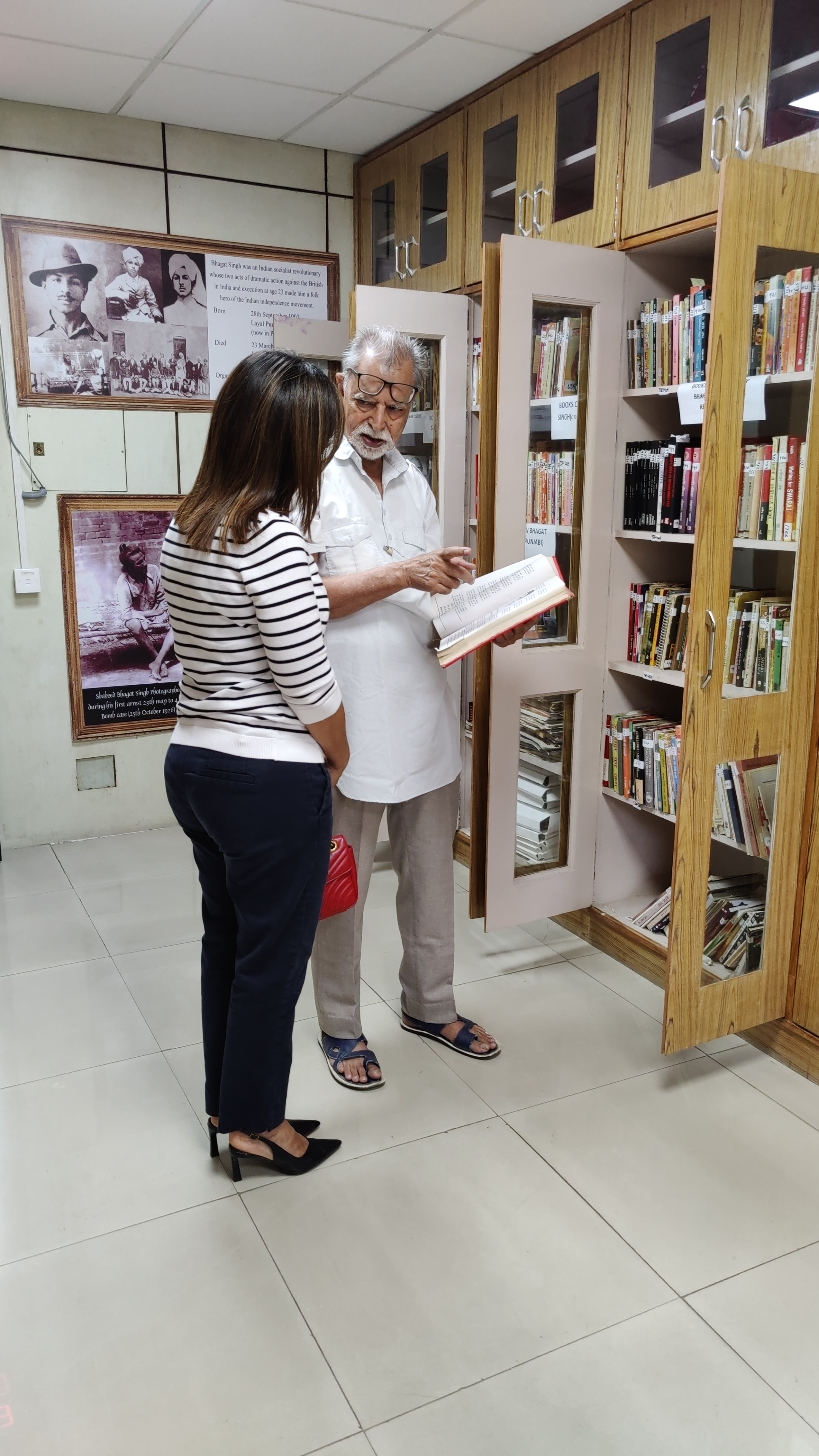
    My best experiences in my mission to spread Bhagat Singh’s ideas are with Gopal Roy, minister of Delhi Govt., who inaugurated Bhagat Singh Archives and Resource Centre, with my gifted collection on freedom struggle of India and which is located in Delhi Archives of Delhi Govt., who, while being in charge minister of freedom fighters cell in Delhi,  holds functions on  every 23rd March and 28th September-martyrdom and birth anniversaries of the three martyrs, by free distribution of books by or on Bhagat Singh to the audience from children to old people in thousands. In one year, he got distributed one thousand copies of Bhagat Singh nephew Jagmohan Singh and mine edited volume of Bhagat Singh and his comrades writings and in another function he got 1500 hundred copies of my four volume collection of Bhagat Singh’s writings published by Publication Division, which has now come out with latest biography of Bhagat Singh in English! This is the best way of spreading Bhagat Singh’s ideas of free India to enlighten the youth! I hope Punjab Government also follows this example of their colleague in Delhi!

*Chaman Lal is retired Professor from JNU, ex Dean of Panjab University Chandigarh and Honorary advisor to Bhagat Singh Archives and Resource centre New Delhi.

    Prof.chaman@gmail.com   whatsapp no 9868774820 

Tuesday, 6 December 2022

Sushila Didi: Companion of Durga Bhabhi


Relook at a Book: Sushila Didi – Life of a Quiet Revolutionary

Chaman Lal 

The book by Satyadev Vidyalankar includes not just memories of Sushila Didi by her fellow HSRA revolutionaries but also an autobiographical note written by her.
Relook at a Book: Sushila Didi – Life of a Quiet Revolutionary

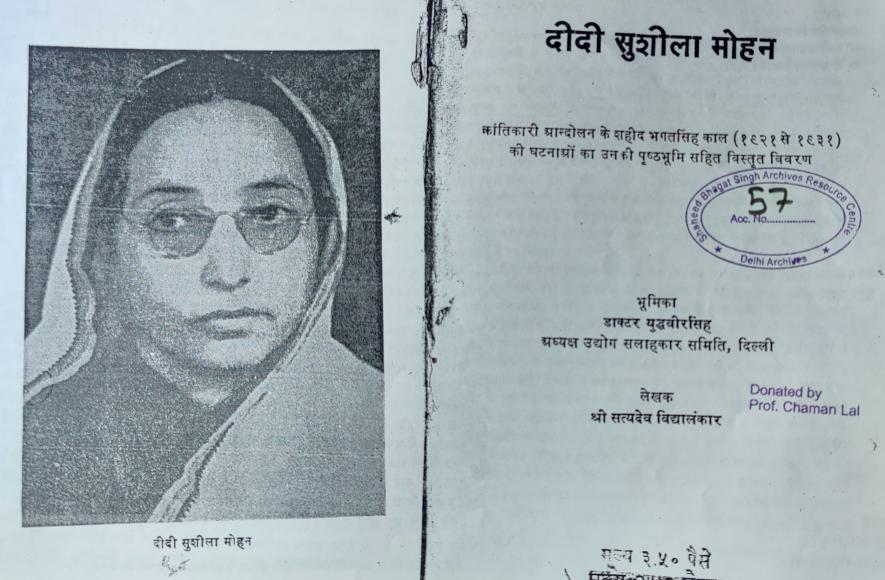
Vidyalankar, Satyadev, Didi Sushila Mohan (Hindi Biography), 1965, Delhi Marwari Prakashan, Pages 390, Price 2/rupees and half Introduction by Dr. Yudhveer Singh

Sushila Didi, in the revolutionary circles, was almost as important as Durga Bhabhi, but she did not get as much fame. Sushila Didi, who later came to be known as Sushila Mohan, after marrying her friend Shyam ji Mohan, who provided her protection when the police were after her.

It was in the late 1960s that some very important books were published on the life and activities of revolutionaries. Many of these books were not republished and slowly became oblivious, except some old libraries holding on to their copies, which are rarely looked upon by readers. Only researchers or some diehard activists read such books, but due to lack of upkeep with modern technology, these too are withering away. Some such books include Manmath Nath Gupt’s They Lived Dangerously in English and Didi Sushila Mohan in Hindi among others. Several special issues of journals on Bhagat Singh, Azad and other revolutionaries also came out in the 1970s, but only a few of these are found now.

The Hindi book Didi Sushila Mohan is authored by Satyadev Vidyalankar and was first published in 1965 by Marwari Prakashan, Delhi at the printed price of just Rs.2.5, having 386 pages and several photographs. This is not just a biography of Sushila Didi, as she was known among fellow revolutionaries, it is also an edited volume, as it includes memoirs of Didi by fellow revolutionaries and an autobiographical note by Sushila Didi herself.

When the book was under print, the editor got the copy of the autobiography by Sushila Mohan written in English, which was included in the volume’s Hindi translation. Thus, this big volume has four sections-- the first is written by Satyadev Vidyalankar as Jivan Darshan (Philosophy of Life) of Sushila Didi in 16 chapters of nearly 170 pages. The first 20 pages are an Introduction by the author/editor and Blessings from well known Delhi freedom fighter, Dr. Yudhvir Singh.

The second section includes photographs of contemporary freedom fighters and Didi’s family in about 25 pages. The third section is devoted to memoirs of Didi’s fellow revolutionaries in nearly 135 pages and the fourth section, or as appendix, is Didi’s own biographical narration in 20 pages plus some other material.

The whole volume, though somewhat spread out and not tightly edited, is a rich source of authentic information of Bhagat Singh, Hindustan Socialist Republic Association/Army and his comrades, of which Sushila Didi herself was a major, but quiet participant.

susila

One should begin looking at the book from the appendix- the autobiographical narration by Sushila Didi. In his editorial note, Vidyalankar underlined her meeting with Mahatma Gandhi in connection with Bhagat Singh’s impending execution, which, as per the editor, clears the doubts about Gandhi’s indifference toward Bhagat Singh execution.

Sushila Didi's autobiographical narration is in simple style. She begins with referring to her birth on March 5, 1905 at Datto Chuhar village of Gujarat district of pre-partition Punjab. Her father Karam Chand was a medical officer in the Army, who retired in 1927. He was an Arya Samajist and a staunch nationalist. After retirement, due to his selfless social service, the British government offered to confer ‘Rai Sahib’’s title on him, which he declined. He was an admirer of Bal Gangadhar Tilak. He arranged education for all his children in DAV schools, as these were considered nationalist education centres.

Sushila Didi was only 14 years old at the time of the Jallianwala Bagh massacre in Amritsar. At that time Gujranwala railway station (now in Pakistan) was burnt and British forces in retaliation air-bombed the city and committed extreme tortures on the people. Mahatma Gandhi visited Gujranwala and while addressing a public meeting asked people to boycott foreign clothes and wear khadi. Sushila Didi was deeply impressed and gave her gold ring to Gandhi. She also started wearing khadi (hand-spun cotton), which she wore throughout her life except when she went underground. She was sent to a nationalist school, Kanya Mahavidyalaya, (set up by Lala Devraj) in Jalandhar in 1921, where she stayed till 1927. Another sympathiser of revolutionaries and Congress activist Kumari Lajjawati was the principal of the school, which later was upgraded to a college and continues till date.

Sushila Didi used to sing her own written poems and songs to spread nationalist feelings. During the visit of radical Congress leader Deshbandhu Chittaranjan Das to her school, to greet him, she recited her poem, which was so emotional that he could not control his tears. On the arrest of Lala Lajpat Rai, a Punjabi song written by her was distributed throughout Punjab.

During her nationalist activities, in a letter to her, her father advised her not to do anything would affect his Army job. She wrote back that rather than quitting her mission, she would prefer not to visit home. So, for two years she did not go home. When she was to appear for her graduation papers, the trial of the Kakori case accused was going on. On the day of her paper, she heard about the death sentence to four Kakori case accused -- Bismil, Ashfaq, Roshan Singh and Rajinder Lahiri. She fainted in the examination hall and could not complete her first paper.

Sushila Didi was already in touch with the revolutionaries. In 1926, on the occasion of the annual function of Hindi Sahitya Sammelan in Dehradun, the students of KMV Jalandhar and National College Lahore met each other. Pandit Chet Ram, who was lecturer in Hindi at National College Lahore (teacher of Bhagat Singh) was the link among the students. Everyone then decided to dedicate themselves to the service of Mother India.

HSRA was in the process of formation then, and she had met Bhagwati Charan Vohra and his wife Durga Bhabhi at the Dehradun conference. Vohar wanted her to distribute HSRA pamphlets that advocated freedom of India by all means, including using violence, if need be. Sushila, with her close friends, secretly and carefully distributed the pamphlets in Jalandhar and sent its copies to officials through post. This created a sensation in Jalandhar.

After completing graduation, Sushila offered her services to KMV for a year, but remained in close contact with the revolutionaries. Vohra introduced her to Jai Chander Vidyalankar (professor of history at National College Lahore and well known historian of ancient India later), who was in charge of the Punjab branch of HSRA. He said that to get the Kakori prisoners released, HSRA needed money. Sushila’s father had given more than 10gm of gold to her for her marriage, which she had kept in safe custody of Kumari Lajjawati. She passed it on to Vidyalankar.

Sushila also came into close contact with other revolutionaries like Yashpal (Hindi fiction writer), Sampuran Singh Tandon (Delhi college Professor), Dhanwantri etc. This made a radical change in her mental outlook.

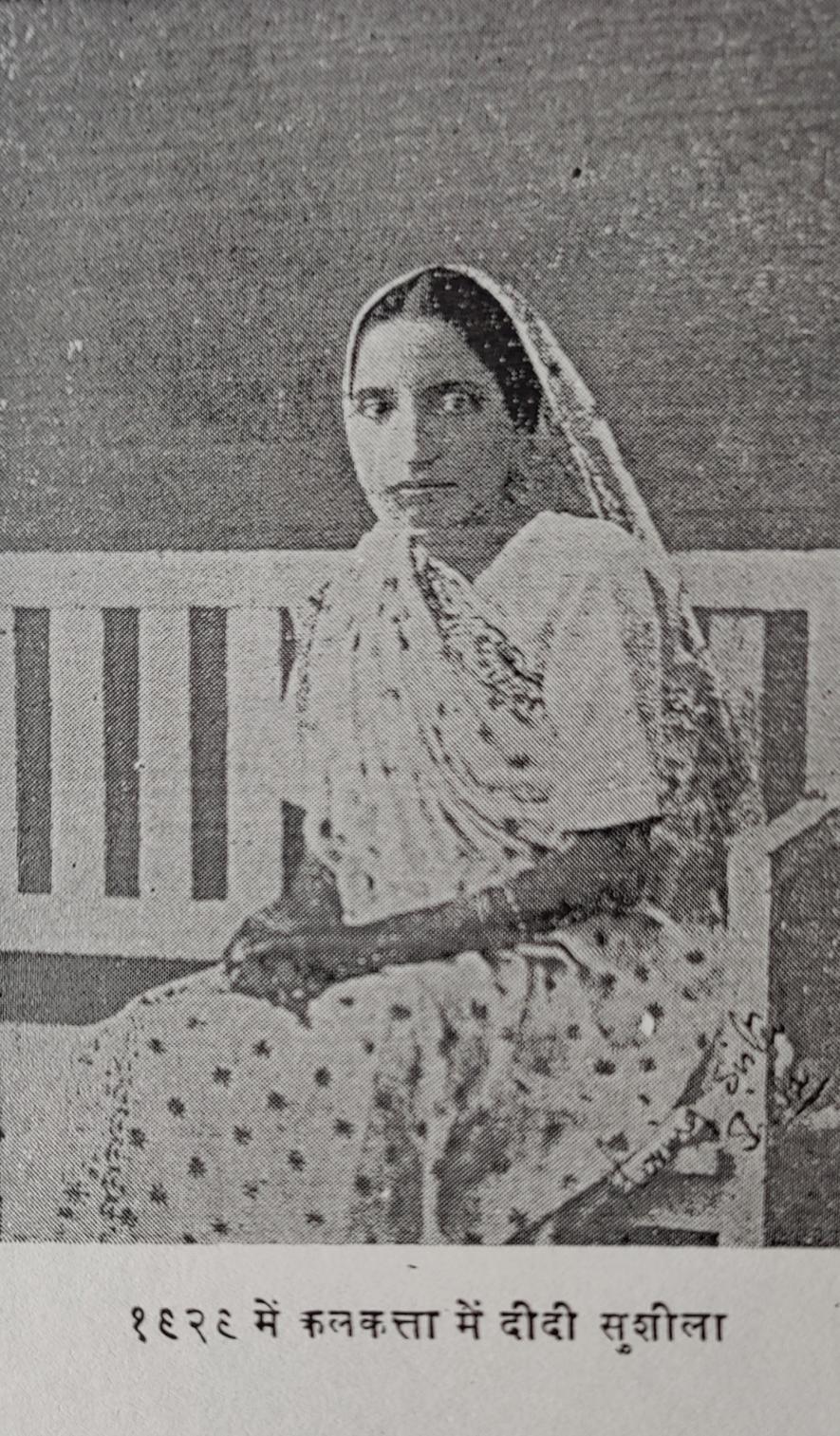
Sushila Didi then narrates the well-known incident of Bhagat Singh’s escape from Lahore after Saunders’ murder and she and Vohra receiving them at Calcutta station and providing him shelter. Bhagat Singh was accompanied by Durga Bhabhi as his ‘wife’. Sushila Didi was then working as a tutor to Savitri, daughter of Chaudhary Chhaju Ram in Calcutta. He narrates:

“Annual Congress session was to be held in Calcutta. Shri Bhagwaticharan had reached Calcutta to my place prior to Saunders assassination. His aim was to contact Bengal revolutionaries. I got a telegram from Bhabhi Durga that she is reaching Calcutta with his brother. I could not make out anything of that telegram, but Bhai Bhagwaticharan immediately understood that Durga ji is coming with Sardar Bhagat Singh. I made arrangements for their stay here.

We reached station to welcome them. Bhai Bhagwati immediately recognised Sardar. Since having clean shaved and hair cut and being in European attire, I could not immediately recognise him. We hugged each other and I brought all to my residence in Sir Chhaju Ram ji’s place. Bhagat Singh stayed with me in Calcutta and Bhai Bhagwaticharn along with Bhabhi Durga returned to Lahore, as the staying together of all in Calcutta was not considered safe…….”

There is further narration of the story, including police raids at the house where Bhagat Singh was staying. Bhagat Singh went to some unknown place, but in February, he again visited Sushila Didi in Calcutta, as he had come to meet Jatin Das for making bombs. There is some contrary narration of events related to th action of bomb throwing in the Assembly. As per Sushila Didi, Bhagat Singh offered himself for this action, but Chandershekhar Azad was not in favour of it. Sukhdev was also of a similar view. This is contrary to other revolutionaries’ accounts, which all say that Bhagat Singh did offer to go, but others rejected it and selected two other revolutionaries for this action, as they did not wish to lose his leadership at a crucial time and knowing well that he is involved in Saunders assassination, which will risk his life.

Since Sukhdev was not present in that meeting, he met Bhagat Singh later and taunted him for ‘trying to save his life’, as he knew that he was the best person for this action. Bhagat Singh called meetings of the group again and despite resistance from other evolutionaries, forced them to send him along with Batukeshwar Dutt for this action. Either there has been a mistranslation of this sentence in Hindi or Sushila Didi was not aware of this fact. She mentions that Sukhdev brought negatives of Bhagat Singh Dutt’s jointly clicked photographs.

Sushila Didi lived with Vohra and Durga Bhabhi in Lahore. In one instance, there was police raid at the house in the absence of Vohra, but Sukhdev was there along with both Durga Bhabhi and Sushila Didi. How both managed to get Sukhdev to escape is an interesting episode.

Another episode completely forgotten now is how Sushila Didi was got involved in the Viceroy bomb attack on December 23, 1929, by Vohra, who had planned this action with Yashpal. He got Sushila Didi to wear a very expensive foreign saree and asked her to inspect the train in which the Viceroy was to travel. At the station, as the Viceroy’s train was standing, Sushila Didi sought permission to just see the beauty of the train from inside, which she was allowed as she looked like a rich lady. She later informed Vohra which compartment the Viceroy was to sit in.

Sushila Didi was also involved with the plan to rescue Bhagat Singh from jail, in which Vohra lost his life while bomb-testing in the house that was rented for this purpose. Durga Bhabhi could not get a last glimpse of her husband, as he was buried by the revolutionaries on the banks of river Ravi in Lahore, as it was risky to get his body home.

After Bhagat Singh, Rajguru and Sukhdev were sentenced to death, there were huge protests in the country. The Gandhi-Irwin talks were on. Chandrashekhar Azad deputed Durga Bhabhi and Sushila Didi to go to Delhi and meet Mahatma Gandhi to save the lives of the three revolutionaries. As per Sushila Didi, she and Durga Bhabhi met Gandhi and conveyed Azad’s message that if he saved their lives, the revolutionary party would surrender to Gandhi. Sushila Didi mentions that they later came to know that Gandhi tried his best in this regard. But again, Durga Bhabhi’s account differs. She had clearly spoken about Gandhi telling Durga to surrender, as she was an absconder in the Lamington Road Bombay shooting incident. (The detailed account of this is included in the appendix of the book written by Baba Prithvi Singh Azad). Durga said they had not come to seek help for Durga, but for saving the lives of three sentenced revolutionaries. As per Durga Bhabhi’s account, Gandhi point blank refused to intervene in the matter. Though Sushila Didi is partly correct that Mahatma Gandhi made some efforts unsuccessfully at the personal level with the Viceroy to get the death sentence commuted.

Sushila Didi first met her husband Shyam ji Mohan in 1929 at Congress leader Shanno Devi’s house in 1929 at Jalandhar, when she was working for the revolutionary party. Mohan was a colleague of another revolutionary Sampuran Singh Tandon, who was teaching in Ramjas College, Delhi. In her absconding period, she took shelter at Mohan’s house, too, who suffered for giving her shelter. Later, they got married.

Sushila Didi joined the Congress party and went to jail during the Quit India movement with a fictitious name, Indumati. (Her inter-caste marriage with Mohan was on January 1, 1933, after she came out of jail). She adopted an orphan boy even before her marriage who remained part of their family.

After coming out of jail, Sushila Didi became active in the Congress party and remained an office bearer of Delhi district party. Her account of life is not complete, it is up to 1942 only, though she lived till January 13, 1963. For her last 20 years’ account, one has to refer back to the author Vidyalankar. In the appendix, there are two letters of January 1954, one by poet Harivansh Rai Bachchan and another by Rudardatt from Ajmer, addressed to her. Then there is Baba Prithvi Singh Azad’s account of the Lamington Road Bombay shooting case of 1930, in which Durga Bhabhi had taken part prominently.

To fill the gaps of Sushila Didi's brief account of her life, Vidyalankar mentions that she was the eldest among six brothers and sisters. The problem with the biographer is that he had penned this in memoir form, which are otherwise authentic historic accounts, fascinating to read, but not in chronological order. So, one has to look through the chronology.

One important fact underlined by author in his introduction is that Bhagat Singh and Sukhdev used to send letters through Sushila Didi from jail to their comrades or other people. He emphatically says that perhaps two dozen such letters of Bhagat Singh had been lost. If so, there is still a possibility of Bhagat Singh’s writings getting discovered from unknown sources. But, now this possibility is becoming dimmer, except that the Lahore conspiracy case’s most important 134 files from Punjab archives, Lahore, are still not fully explored.

Vidyalankar mentions how Sushila Didi made efforts to make the socialist convention successful in 1946 and also helped in organising an old revolutionaries conference in Delhi in 1958, in which over 400 living revolutionaries participated and the then Prime Minister Jawahar Lal Nehru had a long meeting with them.

Sushila was also associated with the Madan Mohan Skill institute for girls for a long time. In the last year of her life, she was the first Alderman (an old term, next only to Mayor, no more in use now) of the Delhi Municipal Corporation. She died on January 13, 1963, before she could complete her term. On her first death anniversary in January 1964, Delhi Congress President Mir Mushtaq Ahmad named a road as Sushila Mohan Marg and Delhi Mayor Nooruddin Ahmad named a high school in her name as Sushila Mohan Girls High School.

Some notable incidents of her life have been narrated in loose style, such as Sushila Didi had sent a rakhi to Bhagat Singh in 1929 with a letter so full of patriotic feelings that Calcutta Hindi daily Swatantar editor had to face sedition charges for publishing it.

There are historic pictures in the book, but since the pnes published here are photocopied from Shiv Verma’s collection, which is now part of Bhagat Singh Archives and Resource Centre, New Delhi, their quality may not be so good.

In the memoirs section one can see almost every well-known revolutionary of those times, who were alive at the time of compiling this book. Beginning from Batukeshwar Dutt, this section includes names like Bejoy Kumar Sinha, Bhagwandas Mahaur, Jogesh Chatterjee, Vishawnath Vaishampayan, Durga Devi Vohra (Bhabhi), Shanno Devi, Satyavati, Subhadra Devi (Joshi?), Kamalnath Tiwari, Pandit Parmanand Jhansi, Banarsidas Chaturvedi, Sita Devi (wife of Principal Chhabil Das), Chaudhary Brahma Prakash(First Chief Minister of Delhi), Sucheta Kriplani (UP Chief Minister) Aruna Asaf Ali and few more.

Banarsidas Chaturvedi, an ex-MP and editor of many books on revolutionaries, had certified author/editor’s claim that Sushila Didi had told him about having many letters of Bhagat Singh that were taken away by some volunteer who did not return them, and she felt very anguished about that. Another interesting incident mentioned is that during Bhagat Singh’s stay in Calcutta after Saunders’ assassination, a torn and worn-out shirt was hanging outside the bathroom. Sushila took away that shirt and brought a new one. As Bhagat Singh returned and enquired about his shirt, in a bit of irritation, she told him that it had been confiscated and gave him a new shirt. She kept that shirt in her own cloth box.

Sitaram Seksaria, an eminent Hindi protagonist of Calcutta, had mentioned that Sushila Didi helped collect funds for Chittagong revolutionaries also. Chhaju Ram Chaudhary’s daughter Savitri Devi, for whom Sushila Didi, was invited as guardian teacher, remembers her bringing an orphan child home and her mother Luxmi Devi (Mrs Chhaju Ram) bringing out that child during Sushila Didi’s underground period. Sushila had placed her younger sister Shanta as guardian teacher of Savitri Devi, after going underground. Luxmi Devi was so impressed by Sushila, that she had agreed to shelter Bhagat Singh without letting her husband know.

The volume is a good and authentic source of historical events of Bhagat Singh and his comrade’s life and actions, HSRA activities and of Sushila Didi’s role in all these activities. But it lacks good editing. A new edition of this


volume, more tightly edited, should be brought out, as an authentic source of revolutionaries' lives is more required in present circumstances of fake and mythical stories being spread as ‘history’ by certain sections of society.


The is a retired Professor from JNU and Honorary Advisor to Bhagat Singh Archives and Resource Centre, New Delhi. He writes on some important books for Newsclick. Prof.chaman@gmail.com

Sunday, 9 October 2022

Venezuelan Ambassador Coromoto Godary visit to Bhagat Singh Archives in Delhi


Videos from 28th September 2022 Delhi Qudsia Bagh function


The Bolivian Dairies and Castro memoirs of Che Guevara

Relook at a Book: The Bolivian Diaries by Ernesto Che Guevara; Che – A Memoir by Fidel Castro

On October 9, 1967, CIA operatives brutally killed Che Guevara. The Diaries record his last months, fighting in the Bolivian jungles. The Memoir has speeches by Castro after Che’s death.
Relook at a Book: The Bolivian Diaries by Ernesto Che Guevara; Che – A Memoir by Fidel Castro

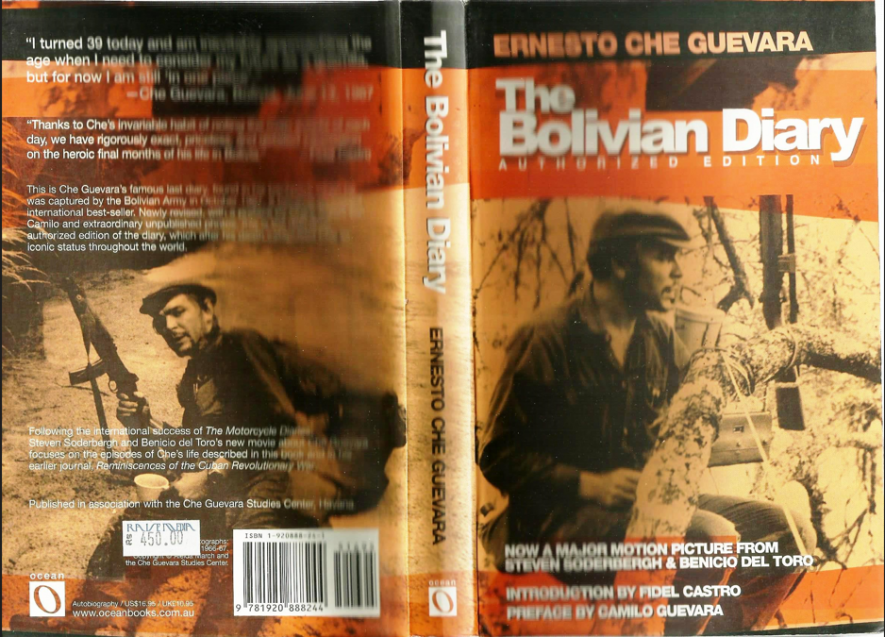
The Bolivian Diaries-authorised edition, Ernesto Che Guevara, Introduction by Fidel Castro, Preface by Camilo Guevara, 1st ed. 2006, Ocean Press, Melbourne-New York, Pages 303, Indian price, Rs. 450

As one of the most important books of world revolutionary movements, this book is made up Che Guevara’s diary notes during his Bolivia mission. Beginning November 7, 1966, the diary has regular entries for 11 months, till October 7, 1967.

The next day, on October 8, 1967, Guevara was captured by the Bolivian army. He was murdered in cold blood on October 9.

Except for Cuba and its leader, Fidel Castro, and the world’s revolutionary movements, no bourgeois politician of the world expressed any sorrow or condemnation for the cruel treatment of a wounded Che and his murder at the behest of US imperialists and their lackey, Bolivian dictator Barrientos.

Che Guevara was at his marvellous best even during his one-day custody, bearing all the pain heroically and challenging his killers to shoot him.

Though the diary is not important in terms of any theoretical foundations, but it reveals, in a matter of fact manner, how selflessly and heroically Che Guevara led this most difficult mission of making revolution in Bolivia. How, despite his serious asthma problem, he left Cuba at a time when he was providing leadership in building socialism as Castro’s most trusted comrade; and how he worked in Bolivia, where most of the circumstances were hostile and conditions not favourable to advance the revolution.

But Che was Che, he could not agree to Fidel’s assessment to wait for more favourable circumstances and ground preparation before he could join the forces there. And Castro was equally great, and kept his word to allow Che to leave the Cuban government and let him organise a Cuba-like revolution in the rest of Latin American countries, a dream nurtured by Simon Bolivar to create a revolutionary United States of South America.

Che wished to begin in his motherland, Argentina, but the conditions were not yet ripe there to lead such a movement. Bolivia was also not ripe yet, but the Cuban victory was a source of inspiration.

 In Cuba, the struggle had started with just 82 men on Granma, of which just 15-16 people survived. Yet, within two years, the 80,000-strong army of dictator Batista was defeated and the revolution was victorious on January 1, 1959.

Fidel Castro not only relieved Che to lead the revolution in Bolivia but he also provided men and arms, including many senior communist party cadres, who sacrificed their lives in the Bolivian mission, like Che.

The Bolivian Diaries has been edited meticulously. Apart from entries by Che, it includes rare photographs of that period, the editor’s brief note, maps of the area, including guerrilla zones, a glossary of people and terms/events, and five communiqués issued by the National Liberation Army (ELN) of Bolivia, fighting under the leadership of Che. The actual diary entries are covered in about 220 pages. A life sketch of Che is also there. 

book

Camilo Guevara, the eldest son of Che Guevara, has written a brief but moving preface. He observes that in the last entry on October 7, 1967, “there is not the slightest tone of discouragement, pessimism, or defeatism; on the contrary, these words seem to be a beginning, a prologue...”

Camilo is sure that the enemies could have never captured Che, despite his wounded leg, broken rifle and no other weapon, except that he could not leave his other sick and wounded companeros. Camilo describes the scene on October 9 as well, when Che was murdered as the ‘order to murder him came from Washington’.

He beautifully concludes that –“Without a trial, without a thought, the new man Che Guevara represented is killed. But what is born is a yearning for the new human being, who is neither an illusion nor a fantasy.  A dream, dormant for many centuries takes shape: an ethical, virtuous selfless human being. This time stripped of all myth and mysticism; this person must be fundamentally human”.

Fidel Castro wrote an Introduction to the diary in 1968, when it was published for the first time in Spanish in Havana, and two lakh copies were circulated free to Cubans. In this introduction, Fidel narrates the story of acquiring the diary from the interior minister of Bolivia, who lost his job for this, and establishing its authenticity.

The Introduction underlines the intense human character of Che and his immense bravery, it also exposes the brutalities of the Bolivian regime, which was a lackey of US imperialism and was playing a puppet’s role.

Castro also exposes the treachery of Mario Monje, secretary of the Bolivian Communist Party at that time, who ditched Che. Even the other group led by Oscar Zamora became a venomous critic of Che Guevara. Moises Guevara, the miners’ leader, joined the movement and sacrificed his life. Other comrades of Monje, like Inti and Coco Perado, also joined and proved their bravery, but Monje went to the extent of sabotaging the movement.

Che knew many peasants in Bolivia but was suspicious and cautious of their character. Despite so many difficulties, he and his comrades performed marvellous feats and the Bolivian army could succeed only on September 26, 1967 against Che’s detachment, after which this group could never overcome the damage.

Castro opines that never in history has so small a number of men set out for such a gigantic task. He has also highlighted the bravery of Che in fighting his last battle on October 8, trying to save two comrades and fighting on, even while he was wounded.

In La Paz, dictator Barrientos and defence chief Ovando decided to murder the captured Che. It was Che, who said firmly to his killer—‘Shoot! Don’t be afraid’. Still, the drunk killer could only shoot him in the side. Che’s agony in the last few hours of his life was very bitter, and Castro puts it aptly: “No person was better prepared than Che to be put to such a test”.

Castro reveals that Che’s diary was obtained without any payment and was published simultaneously in France, Italy, Germany, the US; and in Chile and Mexico in Spanish. He concludes with the famous slogan of Che- Hasta la victoria siempre! (Ever Onward to Victory).

The 25-page-long glossary gives details of almost all the people involved in this epic struggle on both sides. The first appendix refers to instructions to urban cadres, dated January 22, 1967, written by Che and Loyola Guzman, when she visited Che on January 26. According to this document’s reference, the National Liberation Army (ELN) was established in March 1967.

Che has given detailed instructions regarding all organisational aspects for the army, like supplies, finances, transport, and contact with sympathisers, etc. Other communiqués make it clear that ELN is the only responsible party for the armed struggle. In one entry, Che makes an impassioned plea to join ELN, as ‘we are restructuring the worker-peasant alliance that was broken by an anti-plebeian demagoguery.’ He  is confident at this moment that ‘we are converting defeat into triumph.’

The actual diary begins on November 7, 1966, with the inspiring first sentence: “Today begins a new phase...”. The diary has an interesting entry on November 12:  “My hair is growing, although very sparsely, and the grey hair are turning blond, and beginning to disappear; my beard is returning. In a few months I will be myself again.”

Che had entered Bolivia with a fake passport and he had shaved off his characteristic beard. He could not be recognised even by Castro and other comrades in Havana. Che also refers to the existence of 12 insurgents on November 27. He made it a point to write a review of each month’s events at the end of the month. November’s analysis records Che’s opinion: “Everything has gone well; my arrival was without incident and half of the troops have arrived, also without incident...”.

On December 12, Che made certain appointments in the group, giving charge to various people. On December 31, an important meeting with Monje took place. Some understanding was reached, which was not followed by Monje later.

On January 6, Che noted: “The importance of study is indispensable for the future”. In the analysis of the month, he notes with anguish: “As I expected, Monje’s position was at first evasive and then treacherous”. He notes with concern that the party (communist party) has taken up arms against us...” Che concluded ironically: “Of everything that was envisioned, the slowest has been the incorporation of Bolivian Combatants.”

February was not a very conducive month for the group. They had been walking ‘miles and miles’.

On March 14, Che noted: “We heard parts of Fidel’s speech in which he makes blunt criticism of Venezuelan communists and harshly attacks the position of Soviet Union on Latin American puppets.” On March 17, he notes another loss for revolutionaries, as many crucial weapons on backpacks were lost in crossing a river.

On March 23-24, they make gains, they capture weapons from the enemy and kill and arrest many. There is mention of French leftist Regis Debray visiting ELN. In the March 25 meeting of the group, the liberation army is given the name of National Liberation Army of the Bolivia, ELN in short.

Che notes in a detailed analysis of events in March: “The phase of consolidation and purging of the guerrilla force - fully completed”. He noted that the enemy was totally ineffective so far and he was trying to moblise peasants to isolate them.

In April, Che notes ‘total disaster’ on the 4th and ‘great tension’ on the 6th. April 11 records the radio news of a ‘new and bloody encounter’ with mention of nine dead from the army and four guerrillas. April 22 is noted for ‘making mistakes’, and 25th as a ‘bad day’ with the best guerrilla Rolando dying in ambush. The summary of April confirmed the death of Rubio and Rolando as a ‘severe blow’. The certainty of North America’s heavy intervention, which has already sent helicopters and Green Berets, is mentioned, but Che notes the morale of combatants as good.

May Day is celebrated by clearing vegetation in the guerrilla camp. The diary noted Debray’s status as a  journalist being rejected by dictator Barrientos, and his trial. The summary of May is worrisome -- Che notes total loss of contact with Manila (Cuba), La Paz and Joaquin (the other guerrilla group) of ELN, reducing the strength of the group to 25; complete failure to recruit peasants, though they now admire ELN. He notes that it is a slow and patient task.

In June, the 14th is mentioned as the birthday of Che’s youngest daughter, Celia, which is his own birthday as well, which he notes simply as: “I turned 39 (today) and am inevitably approaching the age when I need to consider my future as guerrilla, but for now I am still ‘in one piece’”.

Che notes on June 23 that ‘asthma is becoming a serious problem for me and there is very little medicine left’. In the ensuing days, it worsens. On June 29, he noted they were now 24 men. On 30th, Che notes that ‘Debray apparently talked more than was necessary’. In an analysis of the month, Che notes the total lack of contact, continued lack of peasant recruitment, lack of  contact with the Bolivian communist party, Debray’s case and Che’s recognition as ‘the leader of the movement’. Che notes the urgent task of recruiting at least 50 to 100 men in the movement.

The very first day of July mentions Bolivian dictator Barrientos’s press conference terming the guerrillas as ‘rats and snakes’ and calling for wiping out Che Guevara and punishing Debray. Che’s deteriorating asthma is noted repeatedly.

On July 14, Che noted with concern that the Bolivian “government is disintegrating rapidly. Such a pity that we do not have 100 more men right now.” On July 31, he wrote: “We are 22 men with two wounded, and me with full blown asthma”. The month’s analysis notes the total loss of contact continuing, lack of peasant recruitment continuing, guerrilla force becoming legendary, and the morale and combat experience of guerrilla force increasing with each battle.

On August 2, Che noted: “My asthma is hitting me very hard and I have used up my last anti- asthmatic injection, all I have left are tablets for about ten days.’ On August 8, he makes a speech to his comrades and mentions the difficult situation, but noted: “This is one of those moments when great decisions have to be made, this type of struggle gives us the opportunity to become revolutionaries, the highest form of human species, and it also allows us to emerge fully as men.....”

August’s summary mentions the blow from loss of all the documents, medicines, loss of two men, one desertion (first one). The other features of the month remain the same, but the morale factor changes to ‘decline’, though Che hopes it to be ‘temporary’.

September has much worse news as, after much confusion, it is confirmed that Tania has been killed. Mentioning 10th as a bad day, Che made a funny entry: “I forgot to mark an event: Today I took a bath after more than six months. This constitutes a record that several others are already approaching.” His 26th entry begins with the word ‘Defeat’, on 28th, the entry begins with the words ‘Day of anguish’.

The month’s summary is sad. Che now accepted: “We must consider Jouquin’s group wiped out, still hoping the report to be ‘exaggerated’ and ‘small group wandering around”. He mentions the bitter fact that the army is now more effective and peasants are becoming ‘informers’. Che underlines the most important task as ‘to escape and seek more favourable areas; then focus on contacts, despite the fact that our urban network in La Paz is in shambles, where we also have been hit hard.”

The entry on October 3 is ironic: capture of two guerrillas, Antonio (Leo) and Orlando (Camba), both betray and give information. Debray is praised for his courageous stand in the trial. The last entry on October 7 begins as: “The 11 month anniversary of our establishment as guerrilla force passed in bucolic mood with no complications”. Che mentions that ‘the 17 of us set out under a slither of a moon, the march was exhausting, no nearby houses”.

Che’s last lines: "The army issued an odd report about the presence of 250 men in Serrano to block the escape of the 37 (guerrillas) that are said to be surrounded. Our refuge is supposedly between the Acero and Oro rivers. The report seems to be diversionary. Altitude=2000 meters”.

The Bolivian Diary of Che Guevara records the 11- month glorious struggle to liberate Bolivia from the crutches of dictator Barrientos and its brutal army working directly under US imperialists.

I took look at The Motorcycle Diaries and The Bolivian Diary of Che Guevara together, though the two diaries are entirely different in content and style, one can understand his marvellous and heroic character, which made him an icon of the international revolutionary movement in every part of the world. Wherever resistance movements have erupted after Che’s murder in 1967, his photographs/posters/souvenirs have been the most visible part of demonstrations/processions etc.

Che is an icon for the youth. One can see this from the conduct of Che’s life. The Bolivian Diary shows how selfless and caring he was toward his comrades. How, despite his horrible asthmatic conditions, he suffered all the hardships of guerrilla life, walking 15-20 km a day, performing all the duties of a guerrilla, always full of optimism, even when things were going completely beyond control.

Che realistically analysed the weaknesses of the movement through his diary. He was an idealist, despite being a Marxist. Conditions were not ripe for him to go to Bolivia, which was the opinion of Fidel Castro also, but he was restless to go.

Che Guevara and Bhagat Singh-like personalities create role models for youth or struggling people by their complete selfless conduct. Che was probably hoping to create another Cuba with his 25 men or so, as in Cuba just 15-16 of them mobilised the whole of Cuba and defeated Batista.

But Che underestimated the US's role after the Cuban revolution. It would not allow another Cuba in Latin America at any cost and that is what it did in Bolivia by killing Che and many Cuban revolutionaries in 1967. Yet, the saga of Che Guevara’s bravery and struggle has become a legend and inspiration for the liberation of humankind from all kinds of oppression.

Che could have been impulsive in Bolivia, but his sacrifice created a much more powerful Che for US imperialism, which can never be killed with bullets as it has become idea-personified. The life of Bhagat Singh, an icon in South Asia, has similar characteristics.

Che Guevara in the eyes of Fidel Castro

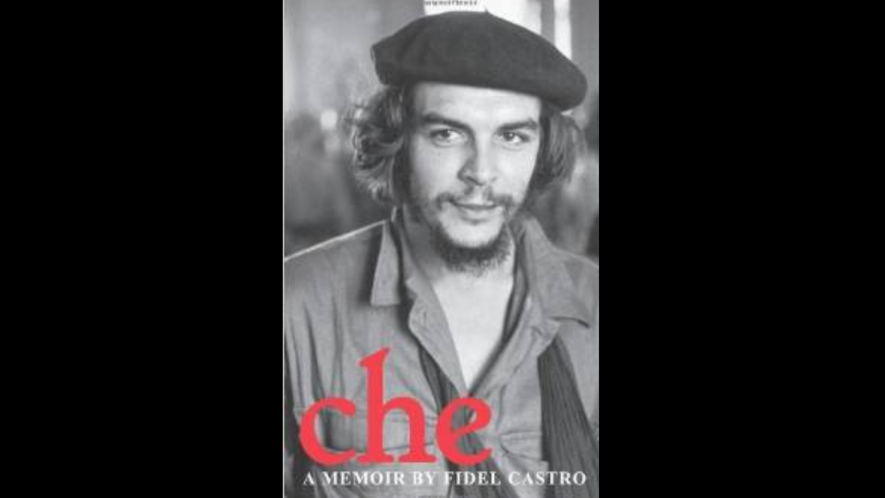
Che: A Memoir – by Fidel Castro, edited by David Deutschmann, Preface by Jesus Montane, National Book Agency, Calcutta, first Indian ed. 1994 [Original Ocean Press, Melbourne]. Rs. 100; Pages 168.

I read for the second time, and it was worth reading again. It has life sketches of both Che Guevara and Fidel Castro in the beginning, followed by Che’s life’s chronology. After a preface by Jesus Montane Oropesa, there is an introduction by David. Then, in seven chapters, Castro’s writings or lectures relating to Che Guevara have been compiled, followed by a Post Script and a Glossary of persons and events.

It starts with Che Guevara’s farewell letter to Castro before proceeding to start revolutionary activities in Africa and Latin America. As Che was not seen in Havana, all kinds of rumours and scandals were spread by the bourgeois media and Castro made the letter public only when Che reached Bolivia in 1966 to participate in the armed struggle that finally led to his life being sacrificed in 1967.

Then there is a speech by Castro on Cuban television on October 15, 1967 to announce the death of Comrade Che. The third chapter includes his speech in front of a million people in Revolutionary Plaza, Havana, in a memorial meeting for Che. Chapter four includes Castro’s introduction to the Bolivian diaries of Che, which were published in 1968 after these were recovered from Bolivia.

Chapter five includes Castro’s speech in Chile, where he inaugurated the first statue of Che Guevara. Chapter six is Castro’s interview with Italian journalist Gianni Mina on the occasion of 20th anniversary of Che’s martyrdom in 1987 and the seventh and last chapter includes Castro’s speech on that occasion at electronic factory named after Ernesto Che Guevara in the city of Pinar del Rio.

It is difficult to take notes on this book - I may have to copy almost half of it. Suffice it to say that it is a very important book to understand both Che and Fidel. It confirms my earlier conviction that Che and Bhagat Singh have much in common. What has been aptly described by Castro in the context of Che is largely applicable to the personality of Bhagat Singh.

Chaman Lal is retired Professor, Jawaharlal Nehru University, New Delhi, and Honorary Advisor to Bhagat Singh Archives and Resource Centre New Delhi. He can be contacted at prof.chaman@gmail.com