This image has an empty alt attribute; its file name is image.png
This image has an empty alt attribute; its file name is image-1.png
This image has an empty alt attribute; its file name is image-2.png
An award was planned in memory of Principal Chhabil Das, who, apart from being his teacher at National College Lahore during his student days at the college-1921-23, was also a dear and close friend, who joined the Naujwan Bharat Sabha formed in college in 1924 and later spread to all over India. The award was first planned in 2020, as the above news in The Tribune suggests, but it remained in limbo for the next six years; it was revived in 2026!
This image has an empty alt attribute; its file name is image-3.png
https://www.google.com/amp/s/www.thehindu.com/news/national/punjab/punjabi-university-institutes-principal-chhabil-das-yadgari-award/article71277962.ece/amp
Punjabi University institutes award in name of Bhagat Singh’s teacher Chhabil Das https://indianexpress.com/article/cities/chandigarh/punjabi-university-institutes-award-in-name-of-bhagat-singhs-teacher-chhabil-das-10808183/
Inaugural function of first award likely to be held on 28th September this month at Punjabi University Patiala✌️
Punjabi University institutes award in name of Bhagat Singh’s teacher Chhabil Das
The Rs 5,000 award along with a certificate will be given to any young researcher of the Punjabi University for writing, presenting, or publishing any book or research paper on Bhagat Singh, his revolutionary associates or any aspect of the freedom struggle of India in the Punjabi language
By:Express News Service
3 min readLudhianaJul 29, 2026 06:02 AM IST
Punjabi University institutes award in name of Bhagat Singh’s teacher Chhabil DasChhabil Das was a teacher and principal at the National College, Lahore, — founded by Lala Lajpat Rai, when Bhagat Singh completed his Faculty of Arts (FA) studies in 1923. (Express Photo)
Make us preferred source on Google
1Print
The Punjabi University has instituted the ‘Principal Chhabil Das Yadgari Award’ for researchers, which will be given every year on the birth anniversary of revolutionary and legendary freedom fighter Bhagat Singh.
Chhabil Das was a teacher and principal at the National College, Lahore, — founded by Lala Lajpat Rai, when Bhagat Singh completed his Faculty of Arts (FA) studies in 1923.
The award, at the Patiala-based university, has been instituted with an endowment fund provided by Chhabil Das’s granddaughter, Saba Dewan, a gifted writer, Prof Chaman Lal, a retired professor from JNU with a long association with PU as a faculty member
Image
Drag and drop an image, upload, or choose from your library.
Upload
Select Image
Generate Image
Insert from URL
The first Principal Chhabil Das Memorial Award ceremony was finally held at Punjabi University. The event, organised by the Shaheed Kartar Singh Sarabha Chair and the Department of Youth Welfare established at the university, was presided over by Vice-Chancellor Dr Jagdeep Singh. The funds for this award were provided by Saba Dewan, the granddaughter of Principal Chhabil Das (who was a teacher of Shaheed Bhagat Singh), along with Prof. Chaman Lal. Pictures of the function are given below: Chhabil Das views on Bhagat Singh.
Principal Chhabil Das article about Bhagat Singh views was distributed on that occasion, which is given here-
HE WAS A DEVOTEE OF THE GOD OF REVOLUTION. CHHABIL DAS
Sukhdev and Bhagwati Charan joined the National College Lahore in 1922-23. They remained at the College for about three to four years. The Naujawan Bharat Sabha was very popular in the College at that time. The Sabha encompassed two different trends of thought, because during those days, India used to get light either from Russia and the Russian Revolution of Lenin or from Ireland, that is, De Valera and the Sinn Féin movement. Naturally, the Naujawan Bharat Sabha was also, ideologically speaking, split into two factions: the emphasis of one was on the Irish revolution and the methods adopted by those people, that is, collecting arms, throwing bombs, etc. The other section liked the Russians, who wanted to create class consciousness amongst the masses, rural people, peasantry and factory workers. In the beginning, Bhagat Singh belonged to the Irish group. His favourite book was Dan Breen's My Fight for Irish Freedom. His other favourite book was Heroes and Heroines of Russia by Pre-Locker. It was a very important book. Sukhdev and Bhagwati were also there. They were members of the Hindustan Socialist Republican Association. They also belonged to the Irish faction. Sukhdev was a very mediocre student at the College. He was a quiet type of person. Bhagwati Charan was also a quiet type- nobody would ever hear him utter anything. Bhagat Singh was, however, a different man. Besides being my students, they had good personal (friendly) relations with me. In the evenings we would meet and talk informally on so many subjects. We would often go to the banks of the river Ravi and spend moonlit nights, boating and rowing there, giving expression to our innermost feelings.In 1928, when Bhagat Singh heard that I was going to be married, he approached me and asked me if it was true. I replied in the affirmative. He insisted that I should not marry. 1 aid, "Bhagat Singh, if I could get a really very good life companion who, instead of retarding my activities, invigorates them, what would be your view? In the same breath I quoted three concrete examples of Mrs Sun-Yat Sen, who was Private Secretary to her husband; Mrs Krupskaya, wife of Lenin; and Jenny Von Westphalen, a companion of Karl Marx. About t her, his colleague Engels wrote: "But for the cooperation of Mrs Jenny, Karl Marx would not have been Karl Marx". So when I talked like this, Bhagat Singh replied, "Gu- By that time Bhagat Singh had shifted to the Russian side. He had joined the Hindustan Republican Association, which later became Hindustan Socialist Republican Association. He asked me to join it.I said, "I have already signed a pledge as a life member of the Servants of the People Society. So how can I join your society without breaking that pledge? I have studied the full prospectus and aims and objects of your society. I know that your programme consists of three things: collecting arms and ammunition; using them on suitable occasions; and starting vigorous propaganda, anti-imperialist propaganda, in the country. I am doing the last thing. These days I am writing books and pamphlets and delivering lectures. " He said, "1 am more than satisfied". I, however, 135 ruji, who can vanquish you in argument". So he yielded. II A word on the sources of inspiration of Bhagat Singh may be a legitimate question here. He drew most of his inspiration from his family. His uncle Sardar Ajit Singh and his father Sardar Kishan Singh were great nationalists who sacrificed everything for the liberation of India and suffered for it. Bhagat Singh admired and eulogised the activities of his uncle Ajit Singh and had a great reverence for him. Also, he had reverence for his father, but he would not agree with him when he wanted to marry him. It was for this reason that he ran away from home. As for Bhagat Singh being an atheist, it is difficult to say anything, for he never talked about these things with us. As a revolutionary, to him revolution was the biggest goddess or god. He never believed in any other deity. When Bhagat Singh left Lahore and first went to Kanpur, and thereafter to Delhi to attend the meeting of the Hindustan Socialist Republican Army, he met me many a time. He would not talk to me on the activities of the Hindustan Socialist Republican Association. Those were secret things to be shared only with their own inner men - I was not in the inner coterie of the Hindustan Socialist Republican Association. But we talked on other political subjects; for instance, we used to talk about the progress of the non- cooperation movement and Gandhi. Bhagat Singh had no admiration for Gandhi and his methods. The attitude of Bhagat Singh was like that of Subhas Chandra Bose. Subhas had said to Gandhi, "Bapu, let us learn to talk the language the British understand. The British will not understand the philosophy of suffering and non-violence; their mighty empire is based upon brutal force. So if we are equally equipped with similar weapons, there can be no doubt about our victory. They are four crores, and we are forty crores in number. The attitude of Bhagat Singh and his fraternity was like that. Bhagat Singh was a born artist. He was fond of dramatics. He used to play the role of Maharana Pratap in the drama (being staged at the college) depicting the life and times of that great hero. I do not remember that he ever played the role of Shivaji. That was by chance. He played many other roles. He was a good singer. The song of Banke Dayal, which he used to sing with his friends, was his great favourite: Kade too bhi Hindiya hosh sambhal ve Hosh sambhal ve, Tera lut gaya mall ve Hindu kahe main sab ton vada mera Hindustan thikana, Muslim kahe ae ghar han sada sanoo miliya hukm rabana, Sikh kahe sada vi sanjha asan pahla kadam jamana Banke, Banke Kahe yaar Firangi aakhe, koi hath lave mnain jana This was a good song and was used to be incorporated in every drama. Another popular song with Bhagat Singh was: Asan vasana ve vasana beeba ae sada ghar baar Tusan nasana ve nasana chhad ke akhirka. IV When Bhagat Singh was in jail (Lahore), I was also in jail (Multan). I had, therefore, no occasion of meeting him. My last meeting with him was, as far as I remember, about the first week of January 1 929 at Kolkata. Bhagat Singh had cut off his long hair, the symbol of Sikhism, at that time. He was dressed in a coat, pants, and a hat. The story of this meeting is interesting. I, too, had gone to Kolkata to attend the session of the Congress. Bhagat Singh was staying at a friend's house. This friend of Bhagat Singh was none other than Seth Chhaiu Ra.! He was not in the revolutionary movement. He was a very big merchant, a commercial magnate. He was from Haryana. So people from Punjab used to come to him. Some Punjabi friend informed me about Bhagat Singh's whereabouts. I went to the Seth's house and met Bhagat Singh there. During my meeting here with him, we didn't talk. We ex- changed glances. And then, after a brief Namaste, he disappeared. I also met Bhagwati Charan there. He said to me, "Guryji, you have seen Bhagat Singh; kindly don't divulge the secret that you saw him at Kolkata". V Bhagat Singh was a very loving soul, very sweet, and at his death I shed copious tears just as one would do at the demise of a sweet friend, sweet comrade. As for Sukhdev, he was lesser than Bhagat Singh, not only in his activities but in personality too. Their colleague Bhagwati Charan was, as noted above, a quiet, silent working man. His comrades and other people unfortunately suspected him to be a Police agent or an agent provocateur. Let me clear another point: Bhagwati Charan was, of course, a senior man; he did not inculcate a feeling of revolution among Sukhdev and Bhagat Singh. Our colleague at the National College, Pandit Jaichandra Vidyalankar, did. He inspired these people to go for Irish-type activities. Jaichandra was Professor of Indian History in the National College. He was a graduate of Gurukul Kangri He was a man of few words. He never talked to anybody; he was a silent man. He used to discuss revolutionary matters in his classes and maybe elsewhere too. In sum, I must say that Bhagat Singh was a loving personality of whom this 'Land of Five Rivers' shall be proud. Ideologically, he and his other colleagues were leftists. The very inclu- sion of the word 'Socialist in their party's name, Hindustan Socialist Republican Association indicates their leanings. During the College days, they did not give any inkling of this or any such leftist tendencies. Later, they did. They read a lot of literature on the subject at the Dwarkadas Library, Lahore. They also used to consult me sof all about the choice of books. I do not remember the names of the books they studied, but two important books, as indicated above, were Heroes and Heroines of Russia by Pre-Looker and Dan Breen's My Fight for Irish Freedom. They would also study The Life of Napoleon Bonaparte by Abbot. They would study one very important book by Upton Sinclair, Cry for Justice. During my English classes, I used to recite passages both in prose and poetry, and they would show great zest for those classes.
NOTES: From his statement in the Oral History Section at the Jawaharlal Nehru Museum and Library, New Delhi. 1. A Jat businessman from village Alakhpura, dist. Hisar (Haryana); he was treasurer of Arya Samaj in Kolkata. 2. At Haridwar, UP, started by Swami Shraddhanand.
(Courtesy M M Juneja book)
why-i-am-an-atheist.pdf https://share.google/pjDv9Se0Ct48rV6GR
why-i-am-an-atheist.pdf https://share.google/pjDv9Se0Ct48rV6GR
This image has an empty alt attribute; its file name is pu-patiala-chhabil-das-award-function-7-10-26-7.jpg
This image has an empty alt attribute; its file name is pu-patiala-chhabil-das-award-function-7-10-26-5.jpg
This image has an empty alt attribute; its file name is ocpa1706-1.jpg
This image has an empty alt attribute; its file name is pu-patiala-chhabil-das-award-function-7-10-26-9.jpg
While Prof. Chaman Lal, one of the contributors to the endowment fund, delivered a lecture on-Bhagat Singh's Teachers, which could not be recorded, Saba Dewan, granddaughter of Principal Chhabil Das and the other contributor to the endowment fund, read a message at the function, while the family details of Principal Chhabil Das progeny were also given by Saba Dewan.
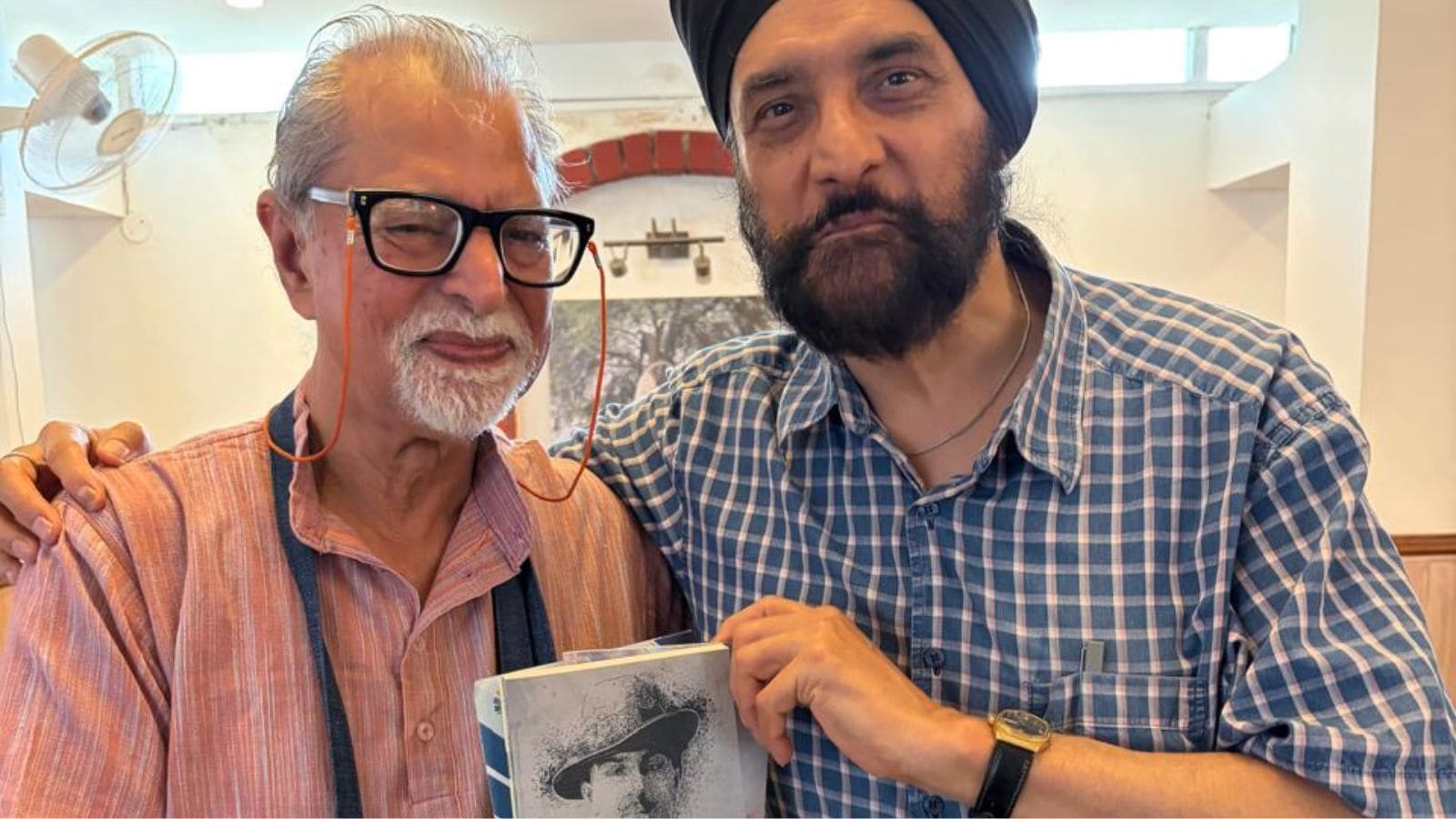
On the occasion, Prof. Chaman Lal, presented the handwritten photocopy of the biography of Bhagat Singh authored by his younger brother Ranbir Singh in Urdu language to Vice Chancellor of Punjabi University, Patiala, to be displayed in any dept/Museum of the University.
This image has an empty alt attribute; its file name is pup-7-10-26-1.jpg
This image has an empty alt attribute; its file name is pup-7-10-26-2.jpg
. Teachers of Bhagat Singh-Brief points of lecture delivered
Govt Primary School Chak no 105-no record 12-16 years
DAV School Lahore-No reference of teachers, but class fellows-
Pranath Mehta, Prem Bhatia-17-21 years
National College Quami Vidyapeeth Punjab(University)-
Chancellor Lala Lajpat Rai
VC Bhai Parmanand and Prof Western History
Principal Acharya Jugal Kishore 1921-23 Prof Pol Sc Oxford return
Principal Chhabil Das
Registrar and Prof. English 1923-26
Prof Jaichander Vidyalankar, Ancient History
Prof Udai Shankar Bhatt, playwright; Prof Sanskrit and Hindi
Acharya Chet Ram Prof in Hindi
Prof Sondhi English
Gurudutt Vidyarthi, Headmaster, National School and first President, NBS
Babu Singh, student, later President, Hind Naujwan Sabha- from Patiala -boating
with Chhabil Das-talking about marriage....
Principal Chhabil Das and Sm.t Sita Devi's children - 1. Mrs Vijay Chauhan, professor of English at Delhi University and a well-known Hindi writer. She was married to Shivdan Singh Chauhan, renowned Hindi MARXIST critic and writer 2. Dr Santosh Sood, professor of Political Science, Punjab University, Chandigarh. Married to Mr Lalit Sood, lawyer, Punjab High Court. 3. Mrs Manorama Dewan, journalist and Hindi writer. Married to Dewan Berindranath, Zafar Payami, well-known journalist and Urdu writer. 4. Shri Ashok Kumar Ahuja, businessman. Married to Mrs Asha Ahuja, homemaker. 5. Dr Jyotsna Wig, retired Professor of anaesthesia, PGI, Chandigarh. Married to Dr Jaidev Wig, a widely respected Surgical Oncologist, PGI and later, upon retirement, at Fortis Hospital, Mohali. Only Dr Jyotsna Wig survives among all the sisters and brother and their spouses.
MESSAGE FROM SABA DEWAN On behalf of Principal Chhabil Das's family - his surviving daughter, Dr Jyotsna Wig and his grandchildren and great-grandchildren, I would like to thank Punjabi University, Patiala, for instituting the Principal Chhabil Das Yaadgari Award, and Prof Chaman Lal for his tireless efforts in conceptualising the award and advocating for it. He has dedicated his life to documenting the lives and struggles of Bhagat Singh and his associates, including Principal Chhabil Das. As his teacher and mentor at National College Lahore, Principal Chhabil Das played a critical role in shaping young Bhagat Singh's political beliefs and his vision of a socialist and secular India. His commitment to socialism prompted Principal Chhabil Das's to write extensively on socialist ideas in simple language that could be accessed by people at large. My sister, Samira Dewan Suri, and I grew up hearing from our mother, late Smt Manorama Dewan, about the contribution made by our grandfather, Principal Chhabil Das and grandmother Smt Devi, a women's rights advocate and labour leader, towards India's struggle for independence. Committed to the ideals of liberty, equality and social justice, they spent long years imprisoned in colonial prisons. Their commitment towards a progressive nationalism remains relevant even more so today and has been a guiding light for us. It is a proud moment for the entire family to see Principal Chhabil Das's political legacy being recognised in the form of the Principal Chhabil Das Yaadgari Award. Our congratulations and best wishes to the two award winners this year, Shri Jagtar Singh and Shri Manjeet Singh....
Image
Drag and drop an image, upload, or choose from your library.
Upload
Select Image
Generate Image
Insert from URL
A well-known journalist herself, Manorma Diwan is the daughter of a great freedom fighter couple-Principal Chhabil Das and Sita Devi. Her husband Dewan Birendernath was also a well-known journalist and Urdu novelist with literary name of Zafar Pyami. Manorma Diwan wrote two books on his family’s role in freedom struggle in Hindi. One-Inqlabi Yatra-Revolutionary Journey was published by National Book Trust (NBT) in 2006. This book is biography of her both parents. In 2006 itself, Remadhav, a new publisher of Hindi published her memoirs of freedom struggle days under the title-Azadi ki Basti-Lane of Freedom.
This biography is divided into fifteen small chapters and does not follow the normal pattern of biographies, it is based more on memoirs of those days and in scattered manner. First chapter-Bannu se Dehradun also does not fall in the normal pattern of chronology. It describes how the atmosphere of Lahore, where the family lived in Lajpat Rai Bhavan of Servants of People’s society. Servants of People’s Society was formed by Lala Lajpat Rai in November 1921, before the arrest of Lala Lajpat Rai on 3rd December of same year.Chhabil Das had become life member of the society and was paid one hundred rupees honorarium per month for working full time for the society and living in society house. Chhabil Das services were given to National College, set up by Lala Lajpat Rai in May 1921, where he was teaching before taking over as Principal in 1922. Only in passing reference author has referred that her father Chhabil Das belonged to District Bannu of North West Frontier Province (NWFP), now renamed as Khyber Pakhtunva in Pakistan, from where he came to Lahore. She refers to her mother Sita Devi belonging to Dehradun, where her father Acharya Ramdev was teacher in Gurukul Kangri. In the very first chapter author refers to Bhagat Singh, being the favourite student of Chhabil Das, who used to call him ‘Guru ji’, he was just six years younger to his teacher. Bhagat Singh had objected to Chhabil Das marriage as he thought that by marrying, he would not be able to teach the lesson of revolution to his students. Chhabil Das, along with Professor Brijnarain of Economics and BPL Bedi, father of actor Kabir Bedi, used to go to villages to hold schools for peasants and explain them meaning of socialism. Chhabil Das was also made editor of Lala Lajpat Rai’’s Urdu daily ‘Bande Matram’ from Lahore. Author’s mother had Vishard degree in Sanskrit and taught for some time in Dev Samaj College Lahore.
In second chapter Jailon ke sathi-Comrades of jails-Sitadevi remained many times in jails, including during 1942 Quit India movement. Savitri Devi, wife of former Punjab Chief minister Comrade Ramkrishan, her daughter and author’s sister Vijya(Chauhan), Satyavati-mother of former Vice President of India Krishan Kant and more. Sita Devi learnt English during her jail stay and participated in many agitations inside jail itself, including putting up national flag on jail gate in the dead of night. Comrade BPL Bedi has mentioned in his memoirs that how they had organised peasant school in Bhagat Singh’s village chak no. 105 in Lyallpur district on 23rd March-martyrdom day of Bhagat Singh in 1935. These schools were held in different villages and sometimes leaders of Ghadar party like Baba Sohan Singh Bhakna and baba Karam Singh also used to join these schools. Author refers to Comrade Ramchand as Chacha ji(Uncle), who was close comrade of Bhagat Singh in forming Naujwan Bharat Sabha and who has written very important books on revolutionary movement. Chhabil Das has joined national movement, when he was doing his M.A. degree course in Dyal Singh College Lahore. Next chapter is focussed on Secularism-Nationalism and ideological commitment. In this chapter author has mentioned that while her father came from Sanatan Dharm background, but became atheist, her mother came from more rational background of Arya Samaj at that time. In this chapter author depicts some background of her father’s birth place, NWFP was formed by Lord Curzon in 1904-5 as separate state from Sindh. Author has also mentioned the sad killing of her Uncle Master Bhavani Das and Prof. Brijnarain-both of them has decided to stay back in post partition Lahore in Pakistan. In next chapter-Fearless fighters-author has depicted the personality features f her parents, both were fearless before British colonialists. One specific chapter is devoted to National College, Bhagat Singh and Naujwan Bharat Sabha. Chhabil das taught English in college and later he became Principal of college. Young students of his college including Bhagat Singh organised Naujwan Bharat Sabha and Chhabil Das wrote many booklets for them like- Chingaria, Inqlabi Sharare, Socialism, Inqlab Zindabad, Hum Swaraj kyon Chahte Hain in Urdu. In this chapter mention is made of Bhagat Singh’s reading habit, he devoured books in Dwarka Das library and one of his most favourit book was Carlyle’s ‘Cry for Justice’, his other favourite being Dan Breen’s-My fight for Irish freedom(Bhagat Singh translated this book in Hindi actually) and Heroes of Russia.Manorma Diwan refers to two groups in Naujwan Bharat Sabha at that time. One supporting Irish line and the other supporting Soviet model. Bhagat Singh was part of Irish group, but later he promoted Soviet model most and renamed HRA into HSRA. Author refers to last meeting of Bhagat Singh and Chhabil Das in January 1929 at Calcutta, where both had gone for 1928 Congress session. They met at the house of Seth Chhaju Ram, where Bhagat Singh was staying at that time. Naujwan Bharat Sabha was formed on Italy’s Young Italy of Gari Baldi and was called Young India Association first, later it got this name after discussing many more names-Tarun Bharat Sangh, Anjuman Naujwan-e-Hind etc. First meeting in this regard was held in National College itself in 1924, it was decided to use Hindustani language for its functioning.
In next chapter author focuses on Lala Lajpat Rai and Servants of People’s Society. Chhabil Das was influenced most by Lala Lajpat Rai and remained in close contact with him. He preferred Urdu daily Bande Matram than English weekly The People, also brought out by Lalaji. Jamna Das Akhtar was his collegue in Bande Matram. Dwarka Das Library was another institution built by Lala Lajpat Rai, where he donated five thousand of his own books first. This was the place used most by revolutionaries. There is some contradiction in reference to Bhagat Singh’s admission to National college, it is written that he was only tenth and not Inter, yet he was given admission in BA Hons, at another place it is written that he was ninth pass and given admission in Inter/BA, but he passed Inter and than jumped into revolutionary activities. But his command over English is underlined in both references, he was interviewed for admission by Bhai Permanand and Chhabil Das and lot many questions were asked on History and Bhagat Singh replied in English, impressing the selectors. In chapter-Revolutionary Pen-author has listed some of Chhabil Das books and pamphlets, apart from mentioned earlier, he wrote-Bhukha Bahisht-Hungry Heaven-on Kangra’s beautiful place. Biggest sin of the wordl-Poverty, Few conversations with youth, Indian peasant, Greatest man of the world, Message of twentieth century, How India was enslaved, Wealth of nations, Blowing hot and cold and few more, all in Urdu. Chhabil Das was propaganda secretary of Punjab Congress party during 1926 to 1934. Comrade Sohan Singh Josh was general secretary of the party-Akalis, Communists and Congress-all three mixed in Congress partyin those days. Chhabil Das was arrested in June 1929, the last peasant school they organised was at Haripur village of Gurdaspur district. He was made part of ‘war council’ of Congress party after it declared 26th January as Independence day in 1930 at Lahore. Chhabil Das remained under strict police watch during 1926 to 1936. In police files of those days, Naujwan Bharat Sabha and its activists Bhagat Singh and Abdul Majeed were also mentioned in CID files.
Author has mentioned the passing away of Chhabil Das on 11th December 1988 at Jalandhar and of Sita Devi on 20th March 1974 at Delhi, where she was living as Rajya Sabha member in those days. There has been reference to Chhabil Das’s school days and his talent, though he was considered a bit naughty. He stood second in Matriculation examination of Panjab University in 1917. He stood third in FA examination from same University at Dyal Singh College Lahore, where he studied during 1917-1920 after matriculation. He read most of classic English and world writers during his college days. From Shakespeare to Victor Hugo, Ruskin, Shelley, Milton, Keats, Tennyson, Tolstoy, Ibsen etc. Chhabil Das spent lot of time in Kangra valley and wrote Hungry Heaven book to depict the sufferings of hill people. In chapter-MLA, Parliamentarian and patriot, author has focused on the role played by her mother Sita Devi in Punjab Assembly from Lahore to Shimla, as MP in Delhi. She stayed on in Lahore after partition as she was then MLA there. Manorma Diwan’s film-maker daughter Saba Diwan has made a documentary for Doordarshan, ’ Sita’s Family’, which depicts her role as mother also. Manorma Diwan in one chapter-Progressive, Liberal and Modern has depicted both her parent’s life and views on life. They had three daughters, Manorma Diwan being the third daughter and son Ashok, which was favoured more than daughters, author has shown weakness of her father for male child quite frankely, though daughters were not denied any facility in life, not overtly discriminated. In chapter-Struggle in independent India-first general elction of 1952 is described, in which Swarn Singh won for parliament from Jalandhar and Sita Devi for Punjab assembly with comfortable margin. Pandit Nehru also campaigned for her in that election. Lala Jagat Narain contesting on Jansangh ticket defeated Sita Devi in 1957 elections. Later she was elected to Punjab Vidhan Parishad and in 1971 to Rajya Sbha. She was part of Bhim Sen Sachar group of Congress which was opposed by Gopichand Bhargav group. Chhabil Das remained attached to Bhim Sen Sachar as his advisor during his Chief Minister and Governor days. In chapter In the eyes of Comrades and Revolutionaries, author has mentioned Jagjit Singh Anand, Press Asia International formed by Manorma and her husband Dewan Birendernath, mention is made of Manorma sister Dr. Santosh Sood, who taught in Panjab University Chandigarh’s Political science department. In chapter-Student and Inspirer, author has returned to Bhagat Singh again, who was Chhabil das student and inspirer as well, even in jail, he was asking for books, while seeing review of a book on Lenin in The Tribune in jail, he asked his lawyer Pranath Mehta, to being that book, which he was reading before being executed. His command over English is praised again. He is mentioned as most favourite student of Chabil Das and was very cheerful person as per his teacher. Chhabil Das was unhappy at Mahatma Gandhi attitude after his execution. Author has expressed her unhappiness at Bhagat Singh being projected as Sikh revolutionary. She has given reference to Comrade Ramchandra book-Ideology and Battle Cries of Indian Revolutionaries and said that pages 112-115 of that book Bhagat Singh’s own written two English poems have been reproduced. As per author’s father Bhagat Singh wrote very good poetry in English. He also wrote scripts and songs for Dramatic group of National College, in which he performed also. All teachers of National College agreed that they never saw such talented and all qualities holder student like Bhagat Singh. Author has given brief description of Chhabil das books in this chapter, who underlined Karl Marx, Fredrick Engels, Lenin as the greatest human beings of the world, apart from Rousseau and Voltaire. She has mentioned Comrade Ramkrishan, who used to add B.A.(National) title to his name and Hindi writer Yashpal as his favourite coleagues. In last chapter-Nice man and loving friend, author has refred to couple’s and other friends caring attitude, mention is made of Brijnarain, Giani Hira Singh Dard and Devdutt Atal, who formed Bal Bharat Sabha,Dhanwantri, Comrade Paras Ram, Ganpat Rai, are also mentioned. The concluding phrase of the book is-Their Revolutionary journey was successful!
Five books have been refered in reference section, which include three by Comrade Ramchand, one by Satyaketu Vidyalankar’s History of Arya Samaj and one report on Servants of People’s society by Satyapal.
Not written in much organised form, still the book is valuable for knowing the personalities of freedom struggle.
2. Azadi ki Basti(Hindi)-Freedom Residence, Manorma Diwan, 2006, Remadhav Ghaziabad, pages 172, price 100/ Rupees
Image
Drag and drop an image, upload, or choose from your library.
Upload
Select Image
Generate Image
Insert from URL
IN 2006 EXPRESSING HER DISMAY AT INCREASING COMMUNALISM, Manorma DiwAN WROTE IN BRIEF introduction to this book that ‘her relation with Lahore is such that even after such long gap, it keeps getting more strengthed’!
This is proper book of memoirs and her memoirs are jotted down in 15 chapters. While there are repetitions in both her books published in same year and on same theme, yet this book seems to be stylistically more appealing. First chapter is –in Lajpat Rai Bhavan-in Lahore, almost like first chapter of her book Inqlabi Yatra, additional information is former Vice President Krishan Kant mother Satyavati celebrating her 100th birthday on 23rd February 2005, she lived for few more years. Second chapter is on her –‘Revolutionary Parents’, discussed in detail in other book. Here 1942 arrests scene is created impressively. In chapter Inqlab Zindabad, focus is on National college set up on 16th May 1921, Lala Lajpat Rai, Chancellor, Bhai Permanand VC, Acharya Jugal Kishore-Principal, Chhabil Das-Registrar and Professor, later Principal after Jugal Kishore retired, Number of students 153, closed in 1926. Bhagat Singh admitted in 1922 at the age of 15 years without Matric, admitted in first year, he passed Inter-FA in 1923 and started doing BA. Bhagat Singh-Chhabil Das-Teacher-taught, but friends, family relations with BS family. Both brothers-Kultar-Kuljit(Kulbir) digressed, no memorial at Hussainiwala till 1967(1965-YB Chavan laid foundation). No film yet on Chandershekhar Azad/Aruan Asaf Ali, Lahore’s Ratan cinema showed KL Sehgal’s Shahjahan, Viplov Thakur, daughter of Comrade Paras Ram in HP? Toady-British touts were called. Manorma Diwan entered Lahore women’s jail to be with her mother due to young age. She met many women criminal cases convicts and even saw how a woman prisoner was hanged, affecting her mind condition for some time, she disclosed it to her mother much later. In chapter-Tiranga on British jail-author describes the valour of women prisoners, who put on Triclolour Congress flag on British jail in Lahore on 9th August 1943, to mark Quit India anniversary-a big event. One chapter is on Aruna Asaf Ali,Freda Bedi and Rameshwari Nehru, all great fighters in Lahore. Aruna remained Mayor of Delhi in 1958. Baba Pyare Lal Bedi was from famous Bedi clan of Dera Babab Nanakand his mother Phool Kaur was daughter of Kapurthla Diwan(Prime Minister) Harikishan Das. His brother Trilochan Bedi was ICS officer. Studyin in Oxford, he got involved with British girl Freda, whom he married and who took part in freedom struggle with Pyare Lal bedi. In last years Freda became Buddhist. Mention is made of Naujwan Bharat Sabha and Congress activist kedarnath Sehgal defeating RSS candidate Beliram. Freda died in 1977 and her last rites were performed in author hme in Delhi. Comrade Ramchand was from Nurpur kangra and organised NBS with Bhagat Singh, remained Punjab MLA, wrote three books on revolutionaries at the age of 80 years on his own expenses. Ashq couple, Hansraj Rehbar visits to home are mentioned. Women leader Shanno Devi, who remained Deputy Speaker of Punjab assembly is also here. Rameshwari Nehru was married to Jawahar cousin Brij Nehru and her relinquished Lahore MLA seat was offered to Sita Devi, mother of Manorma in 1945.
In chapter revolutionary Bal sabha and Nanhe qaidi, Manorma and Santosh joined Bal Sabha, as Indira made in Anand Bhavan in Allahabad. But her sister Vijya even at 13 years of age was active with Communists and was even jailed young, but she was not bothered. In one chapter-Where these People have Gone-author remembers Khan Abdul Ghafar Khan, Iftarudin of Lahore, at whose house Nehru used to stay. Sarojini Naidu. One chapter is dedicated to Our Dede(Dadi-grandmother/paternal), who was conservative, but tolerated everything. On Hindu Code Bill, not only Ambedkar, Sita Devi also faced RSS wrath. In chapter-A big political family-author mentions Lala Achint Ram family-his wife Satyavati, son Krishan Kant, daughter Subhadra,Suman Krishan kant, Avtar-Pushpa-InderGujral family, Seth Radhakrishan in Amritsar, Comrade Ramkrishan, his wife Savitri died in 2004. Harikishan Premi etc. were all part of this big family. In chapter devoted to Kabir, Guru Nanak and Christ, author notes impact of these liberal saints. Mention is made of Bhagat Singh’s letter of 24th July 1930 to his friend Jaidev to bring many mentioned books from Dwarkadas library. In one chapter Anarkali, Noorjahan, Jindan and Pandei are depicted as great women from Lahore, but discriminated as women. Anarkali tomb made in 1604 by Salim(Jahangir), which took ten years to complete, now in Punjab archives, Pandei lived close to Anarkali tomb. Noorjahan tomb is in bad shape. Another chapter is Shalimar Bagh vs. Bulleshah-beauti of Shalimar garden and Bulle’s sufi poetry is mentioned and last chapter of these memoirs is- The tales of Tobha Tek Singhs-author blames Lord Mountbatten for partition of the country and thinks it to be his conspiracy. First communal riots in Baluchistan in 1946 finds reference, where ‘Chaman ke angoor’-Grapes of Chaman(a town) were famous.Partition and its fall out the migrated millions are mentioned and Manto story as symbol Family lived with Amarnath Sood after migration in Dharmshala, then in Amritsar before settling in Jalandhar.
These are scattered memoirs but one can feel the touch of Lahore and days of freedom struggle, feel of revolutionaries and warmth of those days. Important books.


.JPG)

.JPG)
.JPG)



.jpg)
.jpg)
.jpg)
.jpg)
.jpg)
.jpg)


.JPG)
.jpg)

.jpg)


